Startups highlighted the need for a unified and accessible data platform integrating datasets from multiple agencies (IMD, INCOIS, IITM, CWC, NCMRWF, etc.), including startup-generated datasets, to support operational and commercial applications.
Panelists emphasized that incubation support should go beyond providing space and include technical mentoring, technology transfer, guidance on data usage, and stronger collaboration between scientists, institutes, and startups.
Key challenges identified were limited access to raw and high-resolution datasets, inconsistent data formats, lack of hyperlocal observations, and the need for affordable or nominal-cost access to commercial-grade weather and climate data.
Health Session
Participants discussed the growing intersection of climate and health, especially the impacts of heat stress, urban heat islands, and extreme weather events on labour productivity, vulnerable populations, and public health systems.
Startups and consulting organizations stressed the importance of combining quantitative datasets with qualitative community-level information to better understand real-world climate impacts and support decision-making.
The session highlighted the need for hyperlocal climate observations, historical impact datasets, and integrated modelling approaches to improve forecasting, adaptation planning, and climate-risk assessment for health and population sectors.
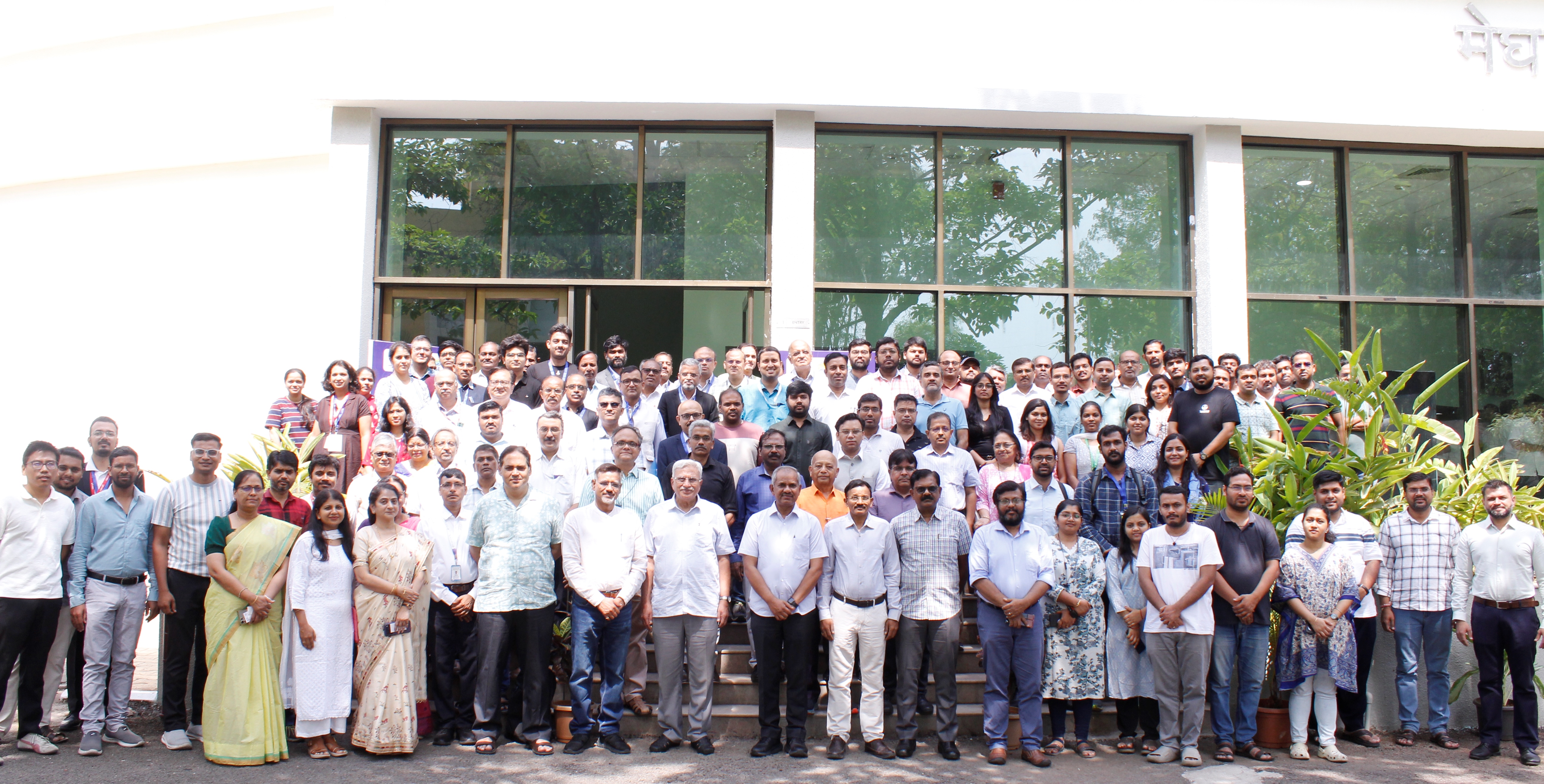
The session emphasized that the IITM Incubation Centre is intended as a collaborative innovation ecosystem where startups, researchers, and MoES institutions can jointly develop weather and climate solutions using scientific expertise, observational infrastructure, HPC resources, testing facilities, and operational support.
Panelists highlighted that startups should bring problem-driven ideas and business models, while IITM and MoES would provide enabling support such as scientific mentorship, calibration/testing facilities, data access pathways, operational deployment opportunities, and challenge statements from the community.
Discussions strongly focused on building a sustainable framework covering intellectual property, commercialization pathways, benchmarking standards, procurement mechanisms, operational validation, and startup-friendly policies to help weather and climate technologies scale nationally and globally.
Additional Highlights from the Discussion
MoES leadership stressed that the incubation centre would help bridge the gap between advanced meteorological capabilities and user-sector requirements, while also enabling startups to work directly with institutions such as Indian Institute of Tropical Meteorology, India Meteorological Department, Indian National Centre for Ocean Information Services, and National Centre for Medium Range Weather Forecasting.
Examples discussed included the use of lightning sensor data, vehicle wiper-speed information for rainfall intensity estimation, improved data assimilation, high-resolution local observations, and integration of startup-generated datasets into forecasting systems
Audience interactions highlighted concerns related to intellectual property ownership, procurement through tender mechanisms, commercialization support, benchmarking methodologies, forecast accuracy certification, and the need for standardized evaluation frameworks for weather and climate products developed within India.
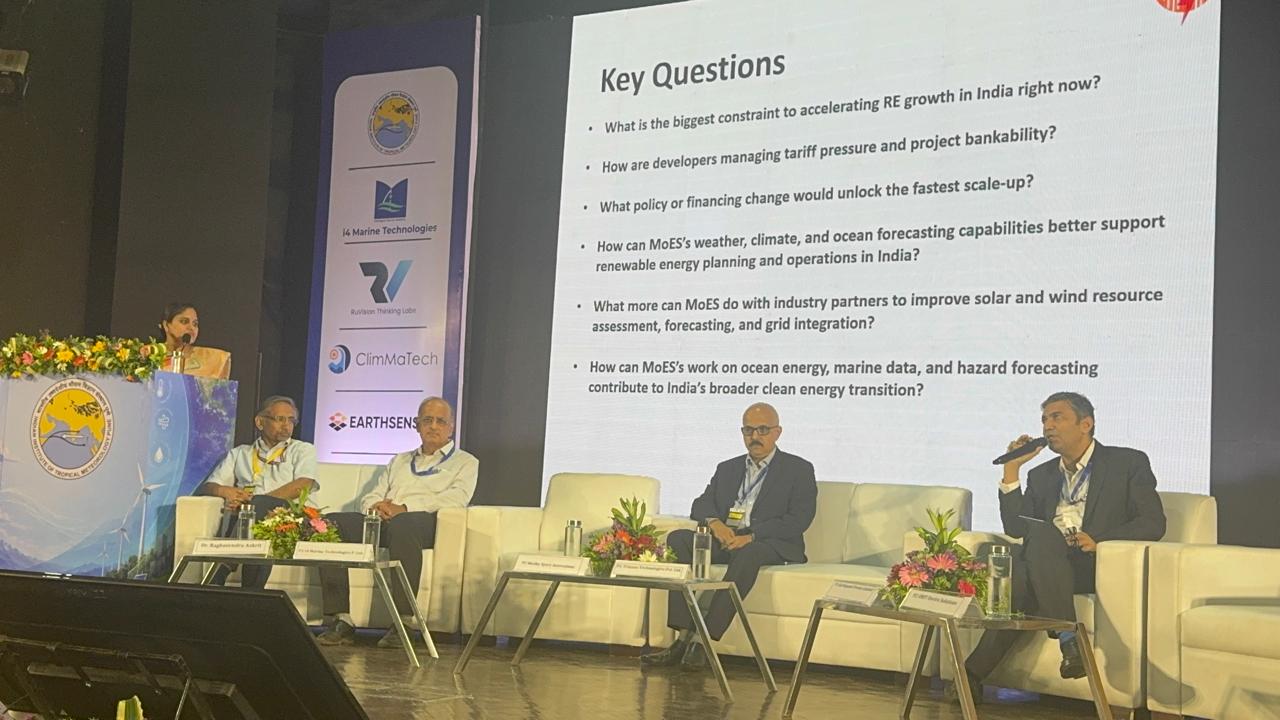
The panel highlighted the growing importance of meteorological support for renewable energy through efficient resource assessment, high-resolution forecasting, grid management, and integration of solar and wind energy into India’s expanding non-fossil energy targets.
Speakers emphasized major challenges including transmission corridor limitations, tariff pressures, policy uncertainties, forecasting penalties, and the lack of high-temporal-resolution weather datasets required for renewable energy forecasting at 15-minute and future 5-minute intervals.
The discussion stressed stronger collaboration between startups, industry, and MoES institutions through the IITM incubation initiative, focusing on localized forecasting, product-specific modelling, improved observational infrastructure, remote sensing, and operational support for startups.
Additional Highlights from Panelists
Startups showcased innovations including WindIQ and SolarIQ platforms, offshore wind resource assessment tools, autonomous monitoring platforms, and renewable energy forecasting solutions aimed at improving grid stability and insurance-linked risk assessment.
Panelists noted that renewable energy growth in India is strongly influenced by policy frameworks, with calls for unified national-level renewable energy policies, repowering strategies for aging wind farms, and balanced implementation of domestic manufacturing requirements.
Audience discussions focused on the urgent need for finer temporal-resolution datasets, improved sensor and satellite infrastructure, and realistic policy expectations aligned with scientifically achievable forecasting accuracy.
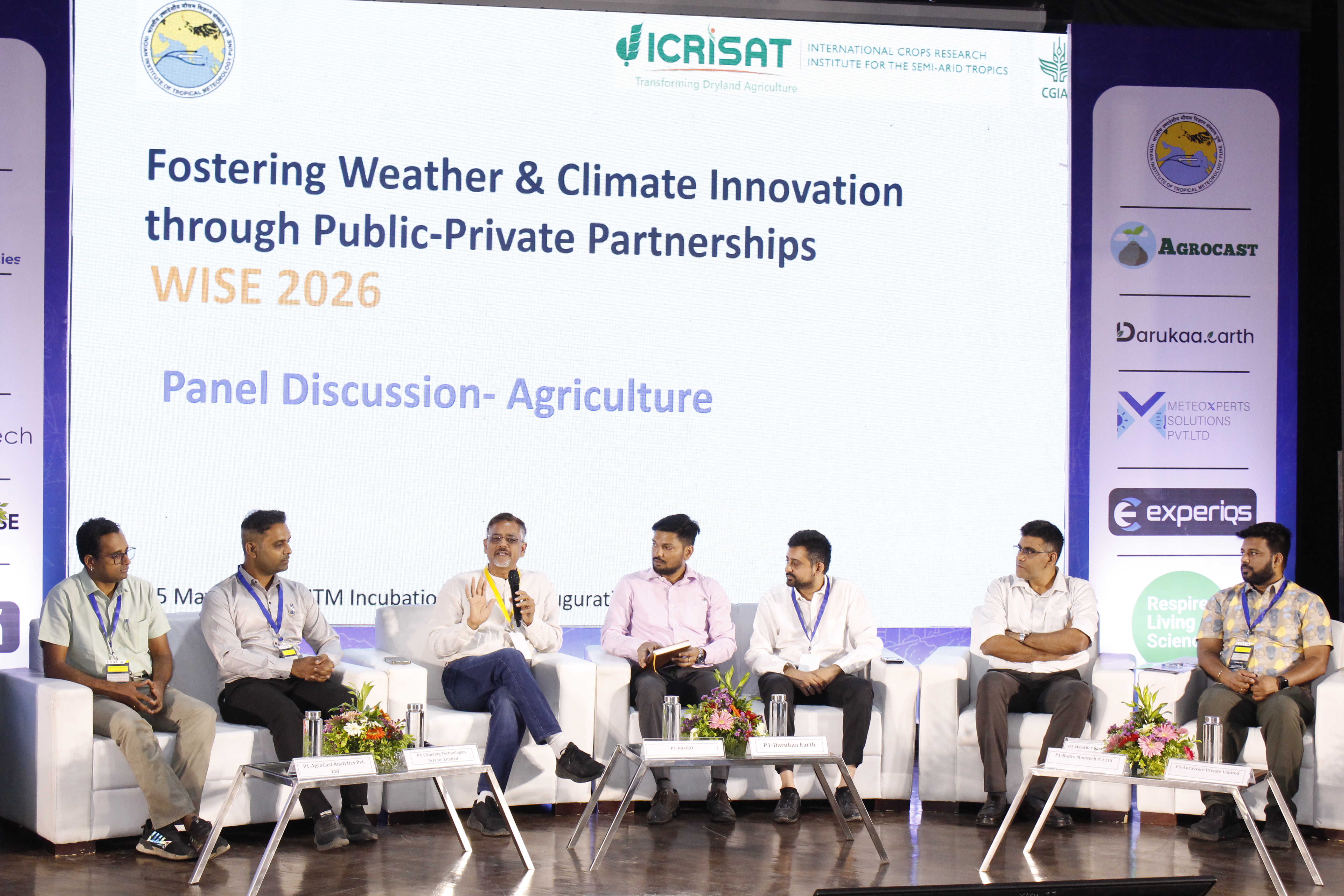
The session highlighted the need to strengthen collaboration between India Meteorological Department, Indian Institute of Tropical Meteorology, startups, and stakeholders to ensure weather and climate products effectively reach farmers, agribusinesses, and disaster management systems.
Panelists emphasized localized weather intelligence, microclimate monitoring, crop water requirement estimation, solar radiation nowcasting, insurance-linked advisory systems, and climate-smart agricultural technologies as major growth areas for weather startups in India.
Discussions stressed the importance of policy reforms, affordable access to high-resolution weather data, computational infrastructure, pilot-to-deployment support, and stronger public-private partnerships to build sustainable and scalable climate-service ecosystems.
Additional Highlights from Panelists
Startups presented innovations in biodiversity-linked microclimate monitoring, agricultural storage technologies, terrain-specific weather sensors, remote sensing products, and decision-support systems for farmers and governments.
Multiple speakers requested collaboration with IITM and MoES for ensemble modelling, localized forecasts, product validation facilities, GPU/computational support, and improved access to observational datasets.
The discussion also underscored opportunities in insurance, logistics, reservoir inflow forecasting, air-quality-health integration, and farmer advisory systems, while stressing the need for robust frameworks connecting research, policy, and end users.